
Golf Buggy Winter Storage & Long-Term Care: Preventing Deep Discharge & Electronic Faults
Proven off-season care tips for electric golf buggies across southern Australia. State of charge optimization, moisture mitigation, tyre preservation, and rodent deterrence.
Why Extended Storage Can Silently Damage Electric Carts
Whether leaving your buggy in a shed during cold winter months in the Southern Highlands, Victoria, or Tasmania, or departing on an extended overseas holiday, parking an electric vehicle without proper preparation can result in dead battery cells, flat-spotted tyres, and corroded electrical connectors. Following a disciplined storage checklist ensures your buggy powers up immediately when you return.
Lithium vs Lead-Acid Battery Storage Chemistry Rules
The rules for storing batteries differ fundamentally based on chemical composition:
- •LiFePO4 Lithium Packs: Never store lithium batteries at 100% full charge or near 0% empty for months. The optimal storage State of Charge (SoC) is between 50% and 70%. In this range, cell internal degradation is virtually non-existent. Lithium packs experience minimal self-discharge (under 2% per month).
- •Lead-Acid Packs: In contrast, lead-acid batteries must always be stored fully charged (100%). Leaving lead-acid batteries in a partially discharged state causes rapid sulfation—where lead sulfate crystals harden on the plates, permanently ruining capacity.
Eliminating Parasitic Draws: The Master Disconnect Switch
Modern buggies feature 12V voltage converters that power digital dashboards, USB charging ports, GPS tracking modules, and wireless remotes. Even with the key turned off, these micro-circuits draw a parasitic current of 15 to 50 milliamps. Over two months, this parasitic drain can pull a 48V battery bank below minimum BMS cutoff thresholds. Always switch the under-seat Tow/Run switch to "TOW" and disconnect the main master battery isolator.
Tyre Preservation: Flat-Spotting & Pressure Adjustments
When a 400kg vehicle sits stationary on cold concrete for months, tyre sidewalls flex and rubber compounds can develop permanent flat spots, causing rhythmic vibrations during driving. Before storage, inflate tyres to the maximum pressure stamped on the sidewall (typically 28 to 32 PSI). For storage exceeding 90 days, place the chassis on four heavy-duty jack stands to lift tyres entirely off the ground.
Moisture, Mildew & Rodent Protection in Rural Sheds
Rural Australian sheds often harbor field mice and possums, which find soy-based electrical wire insulation appealing. Place peppermint oil cotton balls or rodent repellents near the controller housing. Treat marine vinyl seats with UV mildew inhibitor, and park the vehicle under a breathable, water-resistant dust cover rather than a non-breathable plastic tarp that traps condensation.
Pre-Season Recommissioning Checklist
When returning your buggy to service: inspect wiring harnesses for chewed insulation, reset tyre pressures to 20 PSI, verify brake fluid level, switch the Tow/Run switch back to "RUN", connect the wall charger until 100% full, and take a brief 5-minute low-speed test drive around the driveway before heading to the first tee.
Storage Charge Levels Differ by Chemistry
The correct storage state of charge is not the same for both battery types, and applying the wrong rule causes exactly the damage you were trying to avoid. Lead-acid should be stored fully charged and topped up periodically, because a discharged lead-acid battery sulphates and the crystals that form become progressively harder to reverse. Lithium is the opposite: storing at a partial state of charge, commonly around half, puts the cells under less stress than sitting at full charge for months. Both dislike temperature extremes, so a shaded shed beats a tin roof in direct sun. If the buggy will be stored for more than a few weeks, check the pack periodically rather than trusting it, since a small parasitic drain compounds quietly over a long break.
Bringing a Stored Buggy Back Safely
Recommissioning deserves a slower first run than most owners give it. Before reconnecting the pack, look over the wiring for rodent damage, which is common in rural sheds and dangerous if a chewed cable is energised without inspection. Check tyre pressures, which will have dropped over months, and look for flat spots from static loading. Reconnect the battery, then charge fully and observe the charge cycle rather than walking away, since a pack damaged during storage often reveals itself by charging abnormally fast or refusing to complete. Test the brakes at walking pace in a clear area before driving anywhere, because drums in particular can hold surface corrosion after a damp storage period and will feel poor until it wears off.
Summer and bushfire season storage
The same rules apply in summer: a cool, dry place, away from sun and heat, with long-term storage at about 40 per cent charge, as the Queensland Fire Department advises. Our summer heat and bushfire guides cover hot sheds and charging.
Frequently Asked Questions
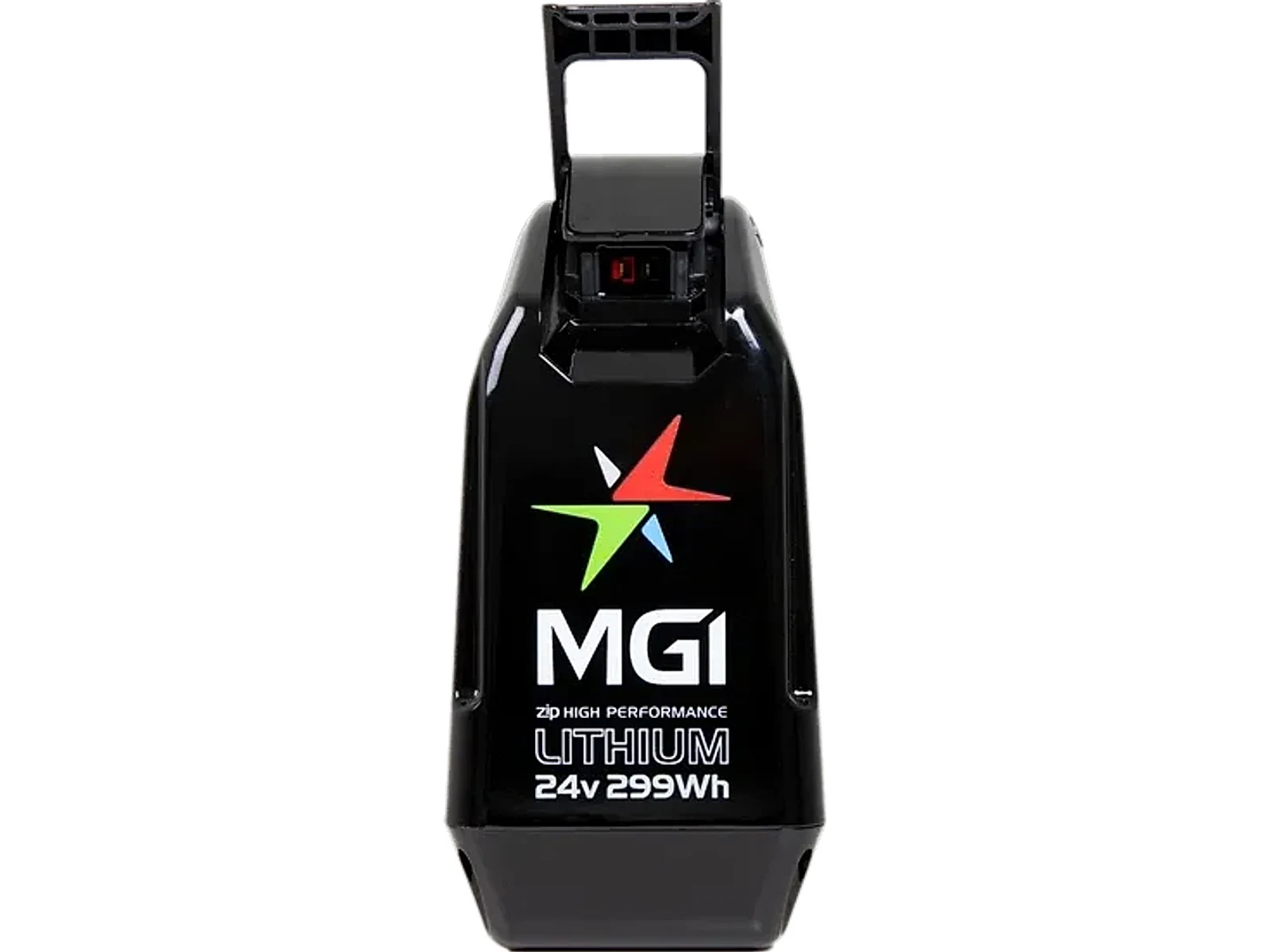
MGI 24V Lithium Battery (24-Spindle / 36 Hole)
24V 380Wh Capacity, Advanced BMS, Click & Go Design. Available for immediate dispatch from our Yatala QLD depot with nationwide enclosed delivery.
More Australian Golf Buggy Guides
Must-Have Golf Buggy Accessories & Spare Parts in Australia: From Umbrella Mounts to Sand Buckets
The top 10 essential golf buggy accessories and replacement spares for Australian courses. Sun protection, sand buckets, drink coolers, and spare wheels.
Lithium vs Lead-Acid Golf Buggy Batteries: 10-Year Total Cost & Heat Performance in Australia
Comparing LiFePO4 lithium against flooded lead-acid and AGM packs in harsh Australian heat. Weight savings, cycle life, charging times, and true 10-year total cost of ownership.
Electric Golf Buggy Troubleshooting Guide: Diagnosing Motor, Controller & Solenoid Faults
Step-by-step diagnostic guide for common electric golf buggy problems. Learn how to test solenoids, identify controller LED error codes, and source spare parts.