
Essential Golf Buggy Maintenance: Protecting Your Cart in Australian Heat & Coastal Salt
Golf buggy service: A preventative maintenance routine covering tyre pressures, brake fluid flushes, lithium BMS health checks, and chassis rust protection.
Australian Climate Challenges: Heat, Humidity, and Coastal Salt Air
Operating a golf cart in coastal Queensland, Sydney Northern Beaches, or coastal Western Australia subjects mechanical and electrical components to harsh environmental stress. High ambient summer temperatures (often exceeding 38°C) test battery management systems, while onshore winds deposit microscopic salt crystals that accelerate electrolytic oxidation on unsealed metal surfaces.
Monthly Owner Maintenance Checklist (10 Minutes)
Regular preventative maintenance requires minimal effort but preserves resale value and ensures trouble-free performance for years to come:
- •Check tyre pressures with a digital gauge: under-inflated tyres increase rolling resistance and reduce range by up to 15%.
- •Inspect suspension bushings and steering linkages for play or grease seal degradation.
- •Wipe down battery casing with a clean dry microfiber cloth and inspect terminal torque.
- •Test horn, turn signals, hazard flashers, and brake lights for road compliance.
Yatala Workshop Support and Mobile Servicing
Need spare parts, replacement brake pads, or custom high-speed controller tuning? Golf Buggies Express PTY LTD stocks over 1,500 genuine OEM replacement components at our Yatala central warehouse, with express overnight dispatch across Australia.
Tyre Pressure: The Most Neglected Ten-Second Check
Tyre pressure affects a golf buggy more than most owners expect, because the vehicle is light and the tyres are small. An under-inflated tyre increases rolling resistance, which draws more current from the pack and directly shortens the range you get from a charge, and it also wears the shoulders of the tread rather than the centre. On a lifted buggy running larger all-terrain tyres, low pressure additionally allows the sidewall to flex enough to unseat on a hard turn. Check pressures cold, before the buggy has been driven, since heat from use raises the reading and hides a soft tyre. Australian temperature swings between a winter morning and a summer afternoon are wide enough to move pressures noticeably, so the check is worth repeating seasonally rather than annually.
Brake Inspection After Wet Grass and Sand
Brakes on a golf buggy live a harder life than the low speeds suggest. Wet grass, irrigation runoff and course sand form an abrasive paste that accelerates pad and shoe wear far faster than dry road use would, and moisture held inside a drum brake after a wet round is what starts internal corrosion. If you notice the pedal travelling further before it bites, the buggy pulling to one side under braking, or a grinding sound at low speed, treat it as immediate rather than something to watch. Buggies that carry four passengers, tow a trailer or run a lift kit place substantially more demand on the same brakes, so their inspection interval should be shorter. Hydraulic disc systems tolerate this environment better than drums and are worth considering as an upgrade.
Storing a Buggy Between Seasons
Buggies that sit idle deteriorate differently from buggies that are used, and the damage is quiet. A battery left at partial charge for months will sulphate if it is lead-acid, while lithium packs prefer to be stored at a partial state of charge rather than full. Parasitic draws from GPS units, USB ports, soundbars and dash electronics continue drawing current the whole time the buggy is parked, which is how an apparently healthy pack arrives flat in spring. Isolating the pack with a master disconnect removes that drain entirely. Tyres develop flat spots under static load over long periods, so raising pressures slightly before storage helps. In rural sheds, rodent damage to wiring looms is a genuine and expensive risk worth guarding against before you close the door.
Frequently Asked Questions
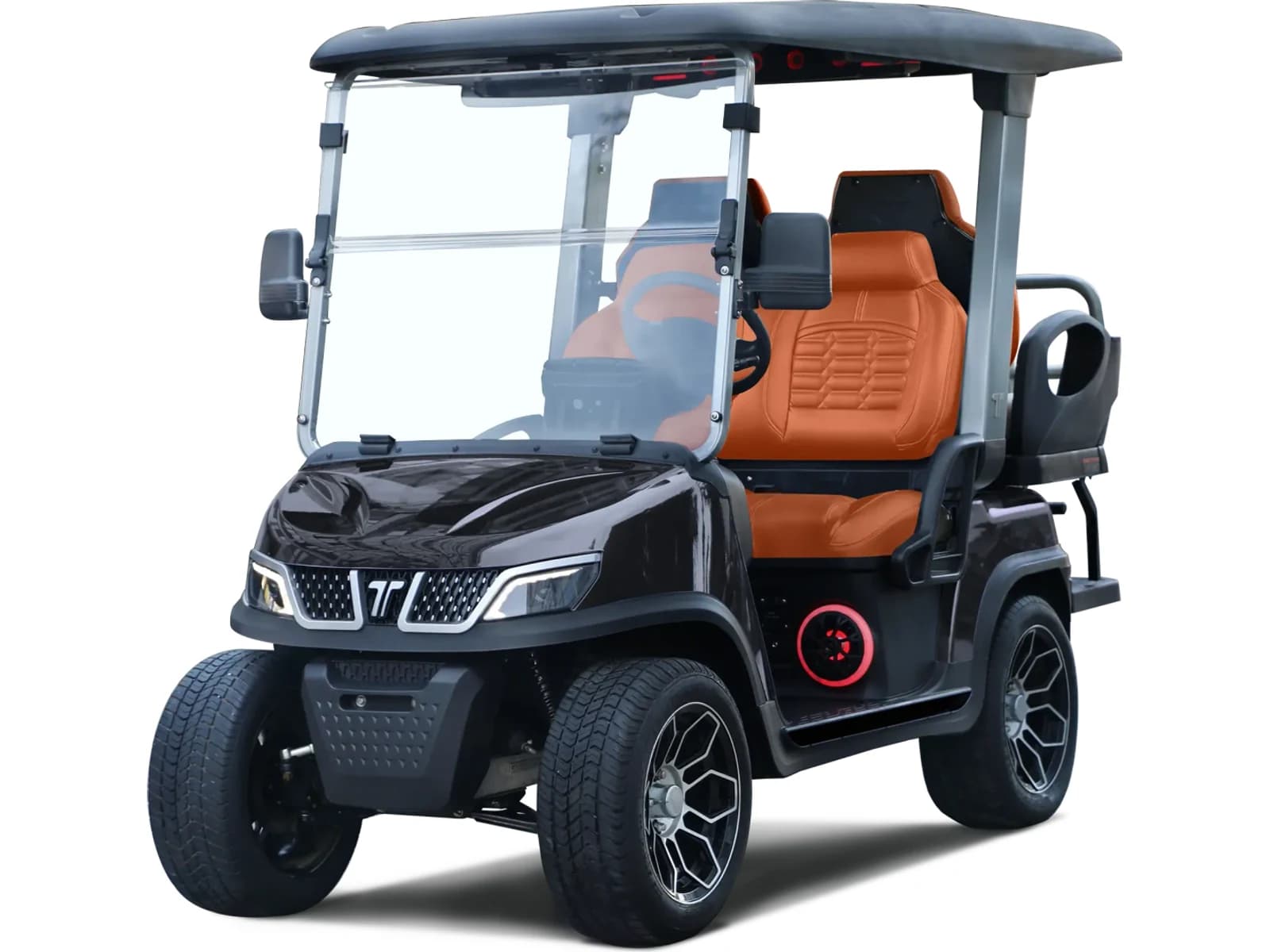
Tara Roadster 2+2 Lifted
Lithium Battery, Lifted Chassis, Hydraulic Disc Brakes, LED Light Package, Rear Flip Seat. Available for immediate dispatch from our Yatala QLD depot with nationwide enclosed delivery.
More Australian Golf Buggy Guides
Electric Golf Buggy Maintenance Schedule: Monthly, Quarterly & Annual Checks for Longevity
A preventive maintenance guide for Australian electric golf buggies and utility carts. Brake fluid flushes, differential oil, tyre rotations, and electrical contact care.
Lithium vs Lead-Acid Golf Buggy Batteries: The Complete Australian Buyer Guide
Comparing real-world driving range, 8-year lifespan savings, hill climb torque, and maintenance differences for Australian golf courses and acreage estates.
Buying a 4-Seater Golf Buggy in Australia: Road Rules, Acreage & Resort Access
Everything you need to know before buying a 4-passenger golf buggy in QLD, NSW, and VIC — conditional registration, community estate bylaws, and safety specs.