
Golf Buggy Brakes Explained: Drum, Disc & Electromagnetic Braking Compared
Golf buggy brakes: How the three braking systems fitted to Australian golf buggies actually work, why heavier or lifted models need more than a stock drum brake, and the warning signs a brake upgrade is overdue.
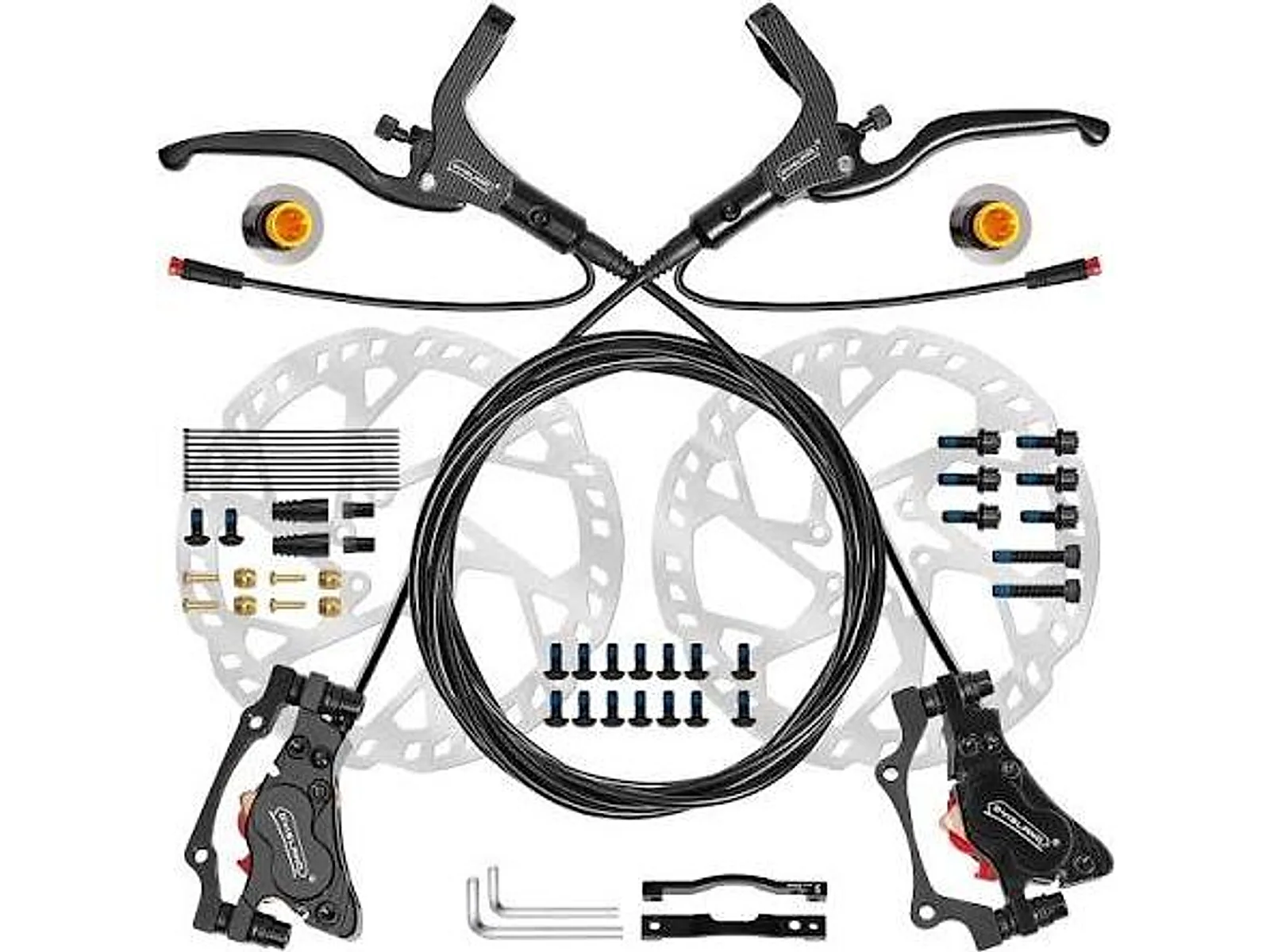
Three Different Braking Systems, Not One Spectrum
Golf buggies use three genuinely different braking approaches rather than a single system in varying strengths: mechanical drum brakes, hydraulic disc brakes, and electromagnetic regenerative braking. Knowing which one is fitted to a buggy you are considering — and whether it matches the weight and terrain you plan to put it through — matters more than most buyers realise until they need to stop quickly on a slope.
Mechanical Drum Brakes: The Standard Factory Fitment
Drum brakes use a foot pedal to mechanically expand brake shoes against the inside of a drum, and they're the standard, lightest and least expensive system fitted to most stock 2-seater buggies. On flat, sealed ground with the factory tyre and weight, they're genuinely adequate. Add a lift kit, all-terrain tyres, a second row of seats or regular hill work, and a drum brake is the first component to feel out of its depth.
Hydraulic Disc Brakes: The Standard Upgrade For Weight And Terrain
Hydraulic disc brakes use fluid pressure to clamp a caliper onto a rotor, giving stronger, more consistent stopping power that holds up better under repeated use than a drum brake, particularly downhill or fully loaded. The heavy-duty 4-wheel hydraulic disc brake kit we stock is the upgrade most owners fit once they move to all-terrain tyres, add a lift, or start using the buggy for towing or acreage work — more tyre and more speed without a matching brake upgrade is a genuine safety gap.
- •Stronger, more consistent stopping power than a stock drum brake
- •Holds up better under repeated use, downhill or fully loaded
- •The standard pairing with all-terrain tyres and lift kits
Electromagnetic Braking: A Different Behaviour, Not A Stronger Brake
Electromagnetic braking, standard on several of our lithium models including the RXV ELiTE, is not a stronger version of a foot brake — it's a genuinely different behaviour that engages automatically the instant you lift off the accelerator, holding the vehicle in place without any pedal input. On a slope, that removes the rollback that happens with a foot brake alone in the split second before your foot finds the pedal. It's the single feature most worth prioritising for anyone parking or driving regularly on an incline.
Signs A Brake Upgrade Is Overdue
A spongy or delayed pedal, a buggy that needs noticeably more pedal travel to stop than it used to, or any hint of rollback on a slope with the brake applied are all signs the current system is either worn or undersized for how the vehicle is actually being used. Don't wait for a near miss to address it — a brake system should be matched to the buggy's current tyres and typical load, not to how it was specified when new.
Matching Brakes To How You Actually Use The Buggy
The right brake system depends on load and terrain more than personal preference. A light 2-seater on flat sealed roads is genuinely fine on a stock drum brake. Anything heavier, lifted, towing, or regularly on a slope should be running hydraulic disc brakes at minimum, and anyone parking on an incline should weight electromagnetic braking heavily in their buying decision regardless of the rest of the spec sheet.
Brakes when speed or load goes up
More speed, more passengers and a heavy cargo load all lengthen stopping distance. The Atlas 4-Seater Heavy Duty Lifted 350A lists four-wheel hydraulic brakes and the Tara Roadster 2+2 lists hydraulic disc brakes. If you plan a controller upgrade, inspect and service the brakes first. See our golf buggy top speed guide for the full checklist.
Frequently Asked Questions
Heavy Duty 4-Wheel Hydraulic Disc Brake Kit
Dual-Piston Calipers, Stainless Steel Lines, Direct Bolt-On. Available for immediate dispatch from our Yatala QLD depot with nationwide enclosed delivery.
More Australian Golf Buggy Guides
Golf Buggy Tyres Explained: Turf, All-Terrain & Street Tyres for Australian Conditions
The three tyre types fitted to golf buggies in Australia, what each is actually built for, and how to tell if the tyres on the buggy you are looking at match how you plan to use it.
Junior Golf Buggies in Australia: Sizing, Safety and What to Look For
What makes a golf buggy suitable for a junior golfer in Australia, how to size one properly, and the safety points parents should insist on.
Golf Buggy Parts and Spares in Australia: What to Stock and What to Source
Which golf buggy parts are worth keeping on hand, which need a technician, and why Australian parts availability decides a buggy's real lifespan.