
Golf Buggies For Wineries & Vineyards: Row Spacing, Traction & Guest Transport
Golf buggies for wineries australia: What actually matters when a winery or vineyard buys a buggy for row work and cellar-door guest transport: width against row spacing, traction on grassed or loose rows, and running two vehicle types instead of one.
Two Different Jobs Under One Vineyard Roof
A winery buying its first buggy usually discovers quickly that vineyard work and cellar-door guest transport are two different jobs wearing the same name. Row work needs traction, clearance and a width that actually fits between the vines; guest transport needs comfort, presentation and enough seating to move a tasting group without three trips. Buying a single vehicle to do both is possible, but it's a compromise worth going into with eyes open rather than discovering later.
Row Spacing Is A Width Problem, Not A Wheelbase Problem
Standard commercial vineyard row spacing in Australia commonly runs from roughly 2.5 to 3 metres between rows, but the vine canopy narrows the usable gap well below that figure at ground level, and it's overall buggy width — mirrors and any flared guards included, not just the stated wheelbase — that determines whether a vehicle actually fits between rows without clipping foliage. Measure your specific rows and compare them against a model's full width spec before ordering rather than assuming any 'compact' buggy will fit.
Traction On Grassed And Uneven Inter-Row Ground
Inter-row ground in an Australian vineyard is rarely flat, sealed or dry year-round — it can be grassed, mulched, rutted from irrigation, or genuinely muddy after rain, all in the same season. All-terrain tyres and real ground clearance matter more here than on a golf course, and a standard low-clearance golf-spec chassis will bottom out or lose traction on ground that a lifted or off-road model crosses without drama.
- •All-terrain tyres for grassed, mulched or loose inter-row ground
- •Genuine ground clearance for ruts left by irrigation and tractor traffic
- •A flatbed or cargo utility body for carrying pruning waste, picking bins or equipment between rows
Cellar Door Guest Transport Is A Different Brief
Moving tasting-room guests between a car park, the cellar door and a vineyard lookout is a hospitality task, not a field task — presentation, quiet running and passenger comfort matter more than clearance or towing capacity. A resort-style 4-seater with a smooth ride and quiet lithium power reads as an amenity rather than farm equipment, which is exactly the impression most cellar doors want to make.
Running Two Vehicle Types Instead Of One Compromise
For wineries doing meaningful volumes of both jobs, the more common and more satisfying setup is two purpose-built vehicles rather than one general-purpose compromise: a commercial utility model for row work and equipment moving, and a presentable 4-seater kept for guests. It costs more upfront than a single do-everything buggy, but each vehicle actually does its job well rather than both jobs adequately.
Ordering For A Rural Or Regional Winery Address
Freight to a vineyard or winery address, whether it's five minutes from a regional town or genuinely remote, is quoted the same way as any other delivery: against your specific postcode, with no minimum order to hit. For larger purchases — say a utility model and a guest 4-seater together — our wholesale and fleet desk can quote the freight as one combined job rather than two separate deliveries.
Hauling loads between rows and cellar door
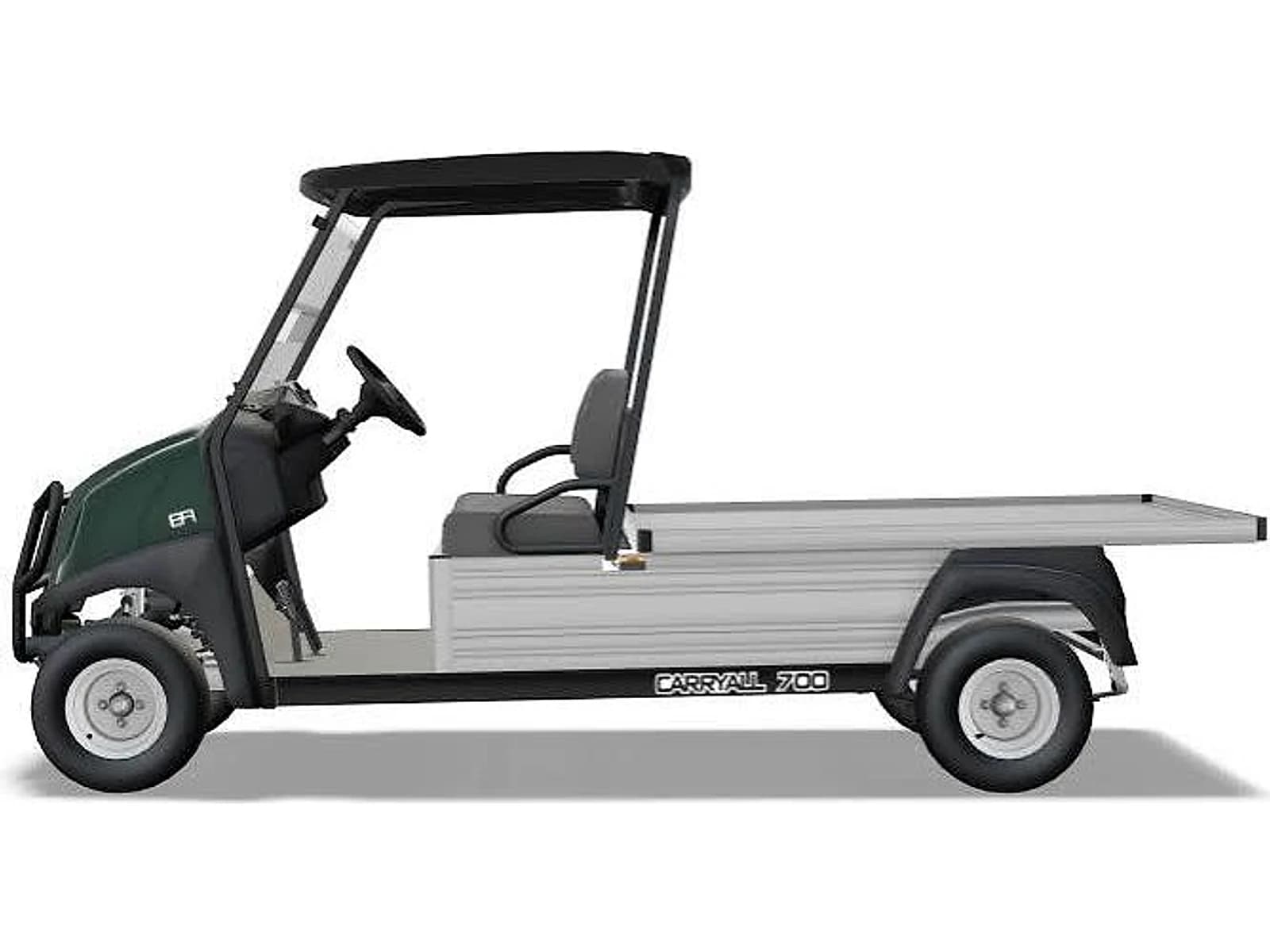
For heavier vineyard jobs, a utility buggy suits better than a passenger model. The Club Car Carryall 700 Electric Utility lists a 680kg payload capacity and a tow hitch, and the E-Z-GO Cushman Hauler PRO Lithium lists 544kg towing capacity. Our guide to buggy, golf cart and side-by-side five-year costs shows how to compare them with a petrol utility vehicle using your own hours and prices.
Frequently Asked Questions
Club Car Carryall 700 Electric Utility
6-Foot Aluminum Cargo Box, 680kg Payload Capacity, Heavy-Duty Tow Hitch. Available for immediate dispatch from our Yatala QLD depot with nationwide enclosed delivery.
More Australian Golf Buggy Guides
Golf Buggies For Caravan Parks & Holiday Resorts In Australia
What a caravan park or holiday resort actually needs from a fleet buggy: durability under constant guest use, easy servicing between peak seasons, and enough capacity to move luggage as well as people.
Golf Buggy Brakes Explained: Drum, Disc & Electromagnetic Braking Compared
How the three braking systems fitted to Australian golf buggies actually work, why heavier or lifted models need more than a stock drum brake, and the warning signs a brake upgrade is overdue.
Golf Buggies For Schools, Campuses & Large Venues In Australia
What actually matters when a school, university campus, hospital site or large event venue buys a buggy fleet for grounds and logistics work: durability, multi-driver use, and matching the vehicle to the actual load carried.