
How to Safely Transport & Tow a Golf Buggy in Australia: Trailers, Ramps & Tie-Down Best Practices
Electric buggy with trailer: Everything you need to know about trailering golf carts on Australian highways. ATM weight calculations, 4-point strap anchor angles, windscreen protection, and enclosed trailers.
Highway Trailering Challenges for Modern Golf Carts
Whether moving your buggy between your primary residence and a holiday home in Noosa, transporting a utility cart to a rural farm, or heading to a regional golf tournament, safe trailer transport requires strict adherence to vehicle mass ratings and tie-down techniques. Modern 4-passenger and lifted buggies weigh between 380kg and 520kg, creating substantial aerodynamic drag and inertia at 100km/h.
Selecting the Right Trailer: Dimensions, ATM & Ramp Angles
Ensure your trailer is properly sized before loading. A standard 2-seater buggy measures roughly 2.4m long by 1.2m wide, while a lifted 4-passenger or 6-passenger buggy can exceed 3.1m in length and 1.35m in width:
- •Minimum Trailer Deck: A 8x5 foot (2.4m x 1.5m) trailer accommodates standard 2-seaters, while 10x5 foot or 12x6 foot trailers are required for extended 4-passenger and commercial models.
- •Aggregate Trailer Mass (ATM): Ensure the combined tare weight of the trailer plus the 450kg buggy does not exceed the trailer stamped ATM rating (typically 750kg unbraked, or 1,200kg+ braked).
- •Ramp Angle & Ground Clearance: On lifted buggies, low-angle folding ramps prevent underbody high-centering when transitioning from ramp to trailer bed.
The 4-Point Tie-Down Method: Never Strap Over Seats or Roof Supports
Improper tie-down is the leading cause of highway buggy damage. Never hook ratchet straps over plastic body panels, seat armrests, or thin aluminum canopy roof struts. Roof struts are designed to support overhead canopies, not resist 500kg of lateral braking force:
- •Anchor to Chassis Steel: Connect rated ratchet straps directly to welded chassis tow loops, front suspension lower A-arms, or the rear receiver hitch.
- •4-Point Crossed Strapping: Use two straps pulling forward and outward at the front, and two straps pulling rearward and outward at the back, creating opposing tension.
- •Strap Rating: Utilize commercial 25mm to 35mm polyester ratchet straps with a minimum Lashing Capacity (LC) of 500kg each.
Critical Pre-Towing Checklist: Windscreen, Roof & Tow/Run Switch
Before driving onto the motorway, complete three essential steps: First, fold the acrylic split windscreen flat down and secure it with Velcro straps, or remove it entirely. At 100km/h highway speeds, headwind buffeting can shatter acrylic windscreens or tear them from their mounting brackets. Second, ensure the rear fold-down seat bench is latched securely. Third, switch the vehicle under-seat Tow/Run switch to "TOW" to disengage the motor controller logic.
Enclosed Trailer Factory Delivery from Yatala QLD
To spare our clients the hassle and risk of hiring trailers and towing heavy equipment, Golf Buggies Express PTY LTD operates specialized enclosed vehicle transport. Every buggy purchased from our Yatala depot is secured inside an air-ride enclosed trailer and delivered turn-key directly to your driveway, golf club, or acreage gate across Queensland, New South Wales, Victoria, and beyond.
Battery Preparation Before a Long Highway Tow
A buggy being trailered should be electrically shut down rather than merely switched off. Setting the tow or run switch to tow disconnects the drive circuit so the motor cannot be back-driven by the turning wheels, which is the mistake that damages controllers on long highway journeys. Isolating the main battery removes any remaining parasitic draw from dash electronics, GPS units or accessory circuits during a multi-day trip. For lithium packs, extremes of heat matter: a trailer sitting in full summer sun on a service station forecourt reaches temperatures well above ambient, and while quality packs include thermal protection, minimising exposure is still sensible. Check the pack state of charge before departure rather than arriving with a flat vehicle you cannot move off the trailer under its own power.
Insurance and Legal Load Requirements on the Road
Once a buggy is on a trailer it becomes a load, and load requirements are a road-law matter rather than a courtesy. Total combined mass must stay within the trailer's rated capacity and within what your towing vehicle is legally permitted to tow, both of which are specific numbers on compliance plates rather than estimates. Loads must be restrained so they cannot shift in any direction, including under emergency braking, which is why the number and rating of tie-downs matters and why straps should be inspected for fraying before every trip rather than annually. Check with your insurer whether the buggy is covered while in transit, because vehicle policies and home contents policies both frequently exclude it, and requirements differ between states so confirm against your own state's road authority.
Frequently Asked Questions
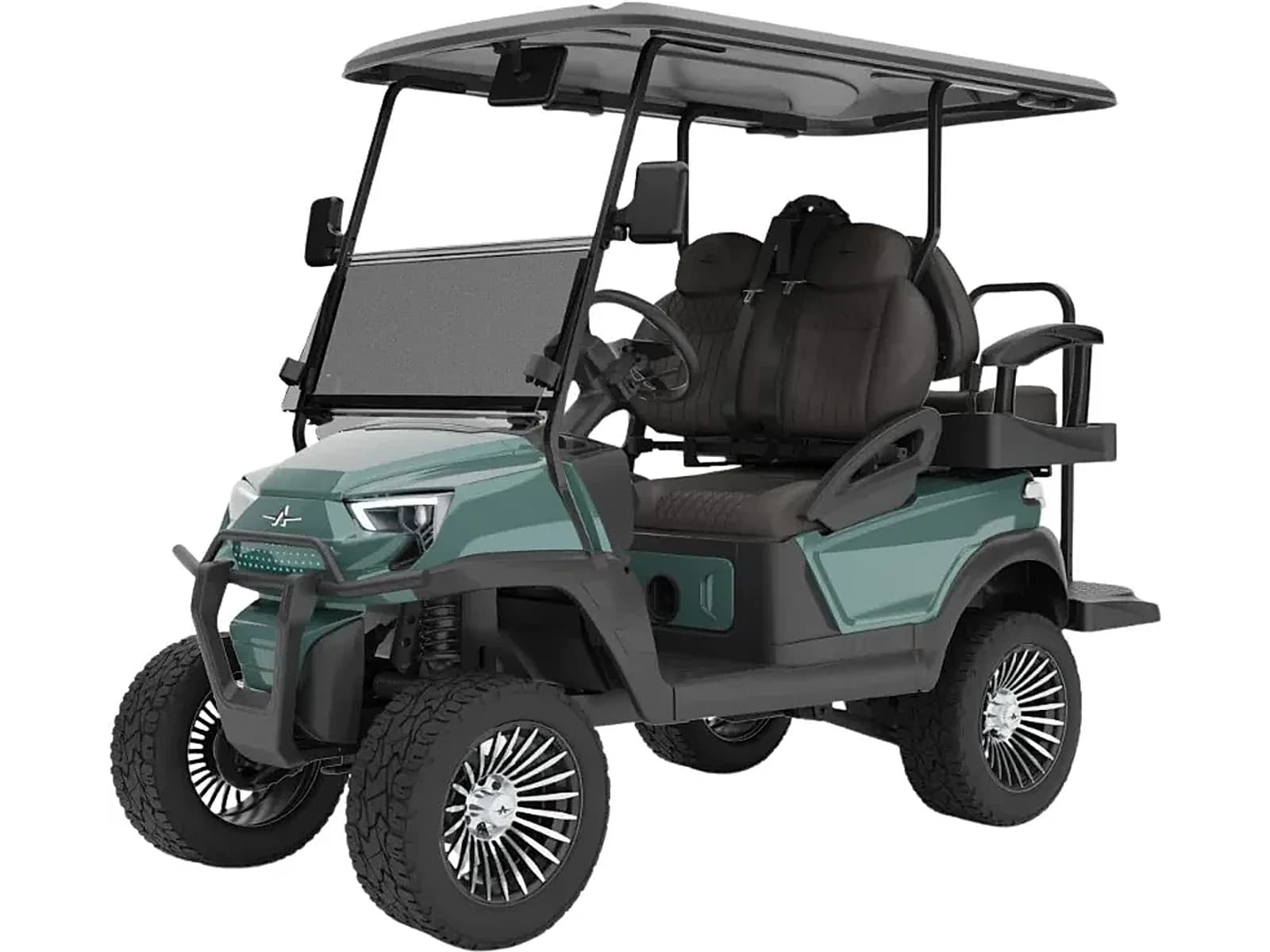
Atlas 4-Seater Heavy Duty Lifted (350A)
350A Controller, 4-wheel Hydraulic Brakes, Rugged All-Terrain Tires, Brush Guard. Available for immediate dispatch from our Yatala QLD depot with nationwide enclosed delivery.
More Australian Golf Buggy Guides
Heavy Duty Off-Road Golf Buggies for Rural Australia: Mud, Slopes & Acreage Fencing
How heavy-duty lifted golf buggies handle steep gullies, cattle paddocks, and muddy tracks across Australian farms with high-torque AC motors and 23-inch tyres.
Golf Buggy Registration in Australia: State-by-State Guide to Conditional Road & Community Access
Navigating conditional road registration across QLD, NSW, VIC, and WA. Essential lighting, seatbelts, speed limits, and permits for golf estates and private acreage.
AC vs DC Motors in Modern Golf Buggies: Torque Curves, Hill Climbing & Maintenance Compared
Technical breakdown of brushless Alternating Current (AC) versus traditional Direct Current (DC) golf buggy motors. Why modern AC drivetrains dominate Australian hills and acreage.