
Remote Control Golf Buggies in Australia: The Ultimate Buyer & Feature Guide
Remote controlled golf buggy: Explore how gyroscopic straight-tracking, twin 230W motors, downhill speed braking, and lithium range make remote golf buggies the top choice for Aussie golfers.
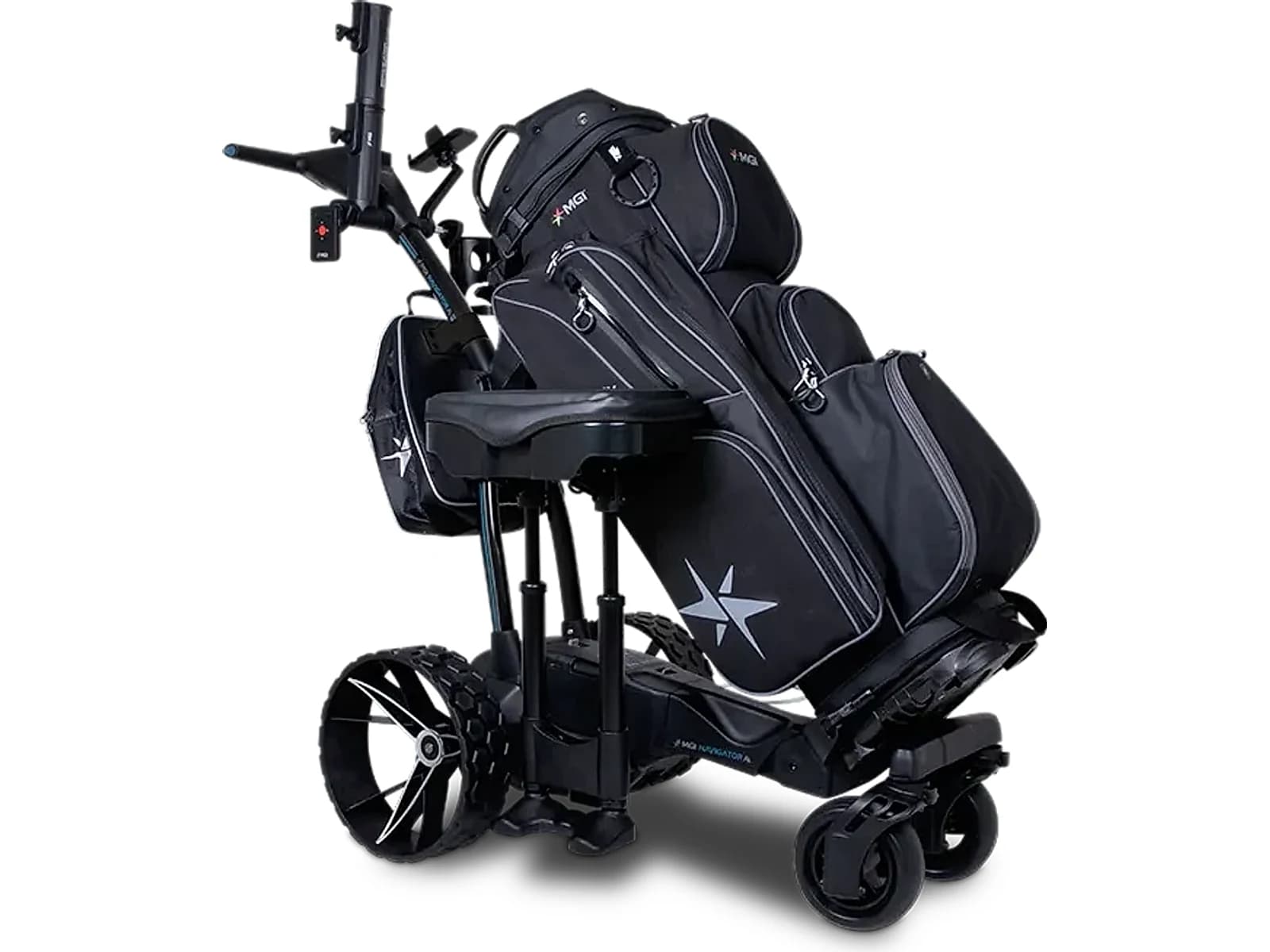
The Rise of Remote Control Golf Buggies on Australian Fairways
Remote control golf buggies have transitioned from a luxury novelty to the gold standard of walking golf across Australia. For members navigating undulating layouts like Kingston Heath, Joondalup, or Hamilton Island, walking without the physical strain of pushing or pulling a heavy tour bag preserves shoulder stability, prevents lower-back compression, and keeps your swing tempo consistent through all 18 holes.
How Patented Gyroscope Straight-Tracking Works Across Side-Slopes
The single most critical technology in a premium remote buggy is automatic gyroscopic calibration. When traversing a severe side-slope, standard two-wheel drive carts naturally veer downhill due to gravity pulling the front wheel. In models like the MGI Ai Navigator GPS and Robera Pro Follow, an integrated multi-axis gyroscope measures drift angle 100 times per second and increases power to the downhill motor while feathering the uphill motor, keeping the cart locked on your target line without constant manual steering corrections.
- •Compensates automatically for uneven bag weight distribution and heavy umbrella attachments.
- •Eliminates the annoying "crab-walking" effect common on cheap single-motor imported buggies.
- •Maintains forward heading even through soft sand patches and morning dew.
Motor Output & Terrain Handling: Twin Calibrated Motors vs Single Motor
Australian golf courses present unique turf challenges—thick coastal couch, dense kikuyu, and undulating sand dunes. Top-rated remote buggies utilize independent twin 230-watt whisper-quiet motors housed inside an aluminum drive axle. Independent drive allows true zero-radius pivoting: one wheel turns forward while the opposite wheel reverses, enabling seamless 360-degree spins on tight cart paths and clubhouse surrounds.
Lithium Battery Chemistry, 36-Hole Range & Cold Morning Reliability
Modern remote carts are powered by dedicated 24V or 29V LiFePO4 or NMC lithium battery packs weighing under 2.8kg. Unlike older 10kg lead-acid units that experienced severe voltage sag after 12 holes, modern lithium management systems (BMS) deliver flat discharge curves. You receive 100% climbing torque on the 18th hill identical to what you had on the 1st tee box. Full recharging takes just 3 to 4 hours on standard 240V Australian wall sockets.
Downhill Speed Control and Rear Anti-Tip Protection
Descending steep fairway drops with an uncontrolled heavy bag is hazardous. Premium remote buggies incorporate electronic regenerative braking: release the forward throttle and the motors automatically engage counter-resistance, maintaining a safe walking speed of 3km/h downhill without runaway acceleration. Additionally, a fold-away rear stabilizer 5th wheel prevents backward tipping when launching up steep bunker mounds.
Yatala Depot Warranty & Australian Spare Parts Availability
Investing in a remote buggy requires dependable local support. At Golf Buggies Express PTY LTD in Yatala QLD, we stock genuine replacement remotes, axle drive clutches, replacement lithium chargers, and front caster assemblies with same-day express dispatch nationwide.
Remote Control Versus Follow Mode: Which Suits You
These are two genuinely different experiences and the choice is personal rather than technical. Remote control means you direct the buggy actively, sending it ahead to the next tee or steering it around a bunker, which suits golfers who like the control and do not mind holding a handset. Follow mode means the buggy tracks a tag on your belt automatically, so there is nothing to hold and nothing to think about between shots, which suits anyone who finds the handset one more thing to manage. Follow mode generally needs clearer line of sight and can be confused by dense obstacles, while remote control works predictably in any layout. Buggies offering both let you switch depending on the hole.
Battery Range Planning for Thirty-Six Hole Days
Range on a remote buggy is quoted in holes rather than kilometres, and the honest planning figure is lower than the headline. Remote and follow operation draw more power than simple forward drive because the buggy makes constant small steering corrections, and hilly courses raise consumption further. A pack rated for thirty-six holes on flat ground may not comfortably cover thirty-six on genuinely undulating terrain with a full bag. If you regularly play long days, the practical options are a battery specified well beyond your usual round, or a second pack carried in the car. Cold mornings also temporarily reduce available capacity, which is worth knowing before a winter competition rather than discovering it on the sixteenth.
GPS, follow and remote compared
Remote control is only one option. Some buggies add GPS, and some follow you automatically. Our guide to electric golf buggies that follow you compares the Robera Pro Follow, the MGI Ai Navigator Halo and the Halo Eye, with prices.
Frequently Asked Questions
MGI Ai Navigator GPS Remote Buggy
Full Directional Remote, Integrated Touchscreen GPS, Gyroscope Straight Tracker. Available for immediate dispatch from our Yatala QLD depot with nationwide enclosed delivery.
More Australian Golf Buggy Guides
Best Golf Trolley in Australia: Push vs Motorized vs Remote Control Comprehensive Evaluation
Find your ideal walking companion on Australian fairways. Detailed comparison of manual push trolleys, motorized walkers, and hands-free remote caddies.
Motorised vs Push Golf Buggies: Which Improves Stamina, Heart Rate & Your Handicap?
Sports science insights into how motorized golf buggies reduce shoulder fatigue, preserve back health, and save 2–3 shots per round on back-nine greens.
How to Choose the Right Electric Golf Buggy in Australia: Walk-Behind vs Ride-On Comparison
A definitive guide comparing walk-behind electric caddies, traditional 2-seaters, 4-passenger estate cruisers, and off-road 4x4 carts for Australian lifestyle and terrain.