
Buying a Second Hand Golf Cart in Australia: 15-Point Pre-Purchase Inspection Checklist
Avoid costly pitfalls when buying used golf carts. How to test battery cell health, detect chassis aluminum corrosion, check motor controllers, and verify serial numbers.
The Second-Hand Golf Cart Market in Australia: Bargains vs Money Pits
Browsing online classifieds for second-hand golf carts in Australia reveals plenty of tempting options starting between $3,500 and $7,000 AUD. However, without technical diligence, an apparently cheap private purchase can quickly turn into a financial nightmare. A cart requiring a new battery bank, replacement controller, and suspension rebuild can easily consume $4,500+ AUD in repairs within the first 60 days.
1. Battery Health Assessment: Date Stamps, Hydrometer & Voltage Drop
The battery system represents 40% to 60% of an electric golf cart value. Never take a seller word that "the batteries are good." Inspect the negative terminal posts for stamped alphanumeric date codes (e.g., C22 denotes March 2022). Connect a digital multimeter across the pack: a healthy 48V bank should read 50.9V to 51.2V when fully rested. Next, accelerate up a steep incline while watching the meter—if the voltage drops below 42V, individual cells are failing.
- •Inspect lead-acid battery cases for bulging side walls, cracked terminal posts, or white sulfate powder.
- •On lithium carts, check the Bluetooth BMS app for individual cell voltage balance and total lifetime cycle count.
- •Verify that the charger output matches the battery chemistry and shuts off automatically when full.
2. Frame and Chassis Integrity: Aluminum vs Steel Rust
Carts from coastal areas (like the Gold Coast, Sunshine Coast, or Mornington Peninsula) require thorough underbody inspection. Club Car models feature aircraft aluminum I-beam chassis, which do not rust but can crack at front suspension mount points. EZGO and Yamaha models utilize tubular steel frames—inspect the battery tray area closely, as spilled sulfuric acid quickly corrodes structural crossmembers.
3. Suspension, Steering Linkages & Brake Lines
Lift each front corner with a floor jack and shake the front wheel top-to-bottom and side-to-side. Excessive play indicates worn kingpins, spindle bushings, or tie rod ends ($400 to $700 AUD repair). Inspect rear brake drums and cables for seizing or uneven shoe wear. On carts fitted with 4-wheel hydraulic disc brakes, check brake fluid color and look for leaks around caliper bleed screws.
4. Motor Controller and Wiring Harness Red Flags
Remove the access panel and examine the main motor controller and solenoid. Watch for melted terminal lugs, corroded copper buss bars, or non-insulated aftermarket wiring splices. Ensure the cart accelerates smoothly from 0km/h without violent stuttering or jerky takeoff, which indicates failing speed sensors or worn potentiometer wiper assemblies.
5. The Certified Reconditioned Alternative from Yatala Depot
To avoid the risks of private sales, Golf Buggies Express PTY LTD offers certified pre-owned and demonstrator golf buggies. Every vehicle undergoes a 40-point technical overhaul, comes fitted with tested or brand-new lithium battery packs, and includes a written Australian warranty and compliant ABN tax invoice.
Questions to Ask Before You Travel to View
A phone call saves wasted trips, and five questions filter most of the disappointments. Ask the age of the battery pack specifically rather than the age of the buggy, since they are frequently different and the pack is the expensive part. Ask why it is being sold, because the answer is often informative. Ask whether it has been used privately or commercially, as a hire fleet vehicle has done vastly more hours than a private one of the same age. Ask whether any service history exists. Finally, ask whether it starts and drives from cold, and arrange to see it that way rather than warmed up, because a pack that has been on charge all morning hides weakness that a cold start reveals immediately.
Budgeting for What a Cheap Buggy Will Need
The bargain second-hand buggy is rarely the cheapest option once it is on your property, and going in with realistic expectations prevents resentment. A tired lead-acid bank is the most common immediate expense and it is substantial, frequently a significant fraction of the purchase price. Tyres are the next most likely, particularly if the buggy has sat outdoors and the sidewalls have perished. Brakes on a neglected vehicle usually need attention. Add freight to get it home, which is a real cost if the seller is not local. Work out the total of the purchase plus the likely immediate spend, then compare that figure against a reconditioned or new buggy with a warranty. Sometimes the second-hand buy still wins, and sometimes the comparison is clarifying.
Frequently Asked Questions
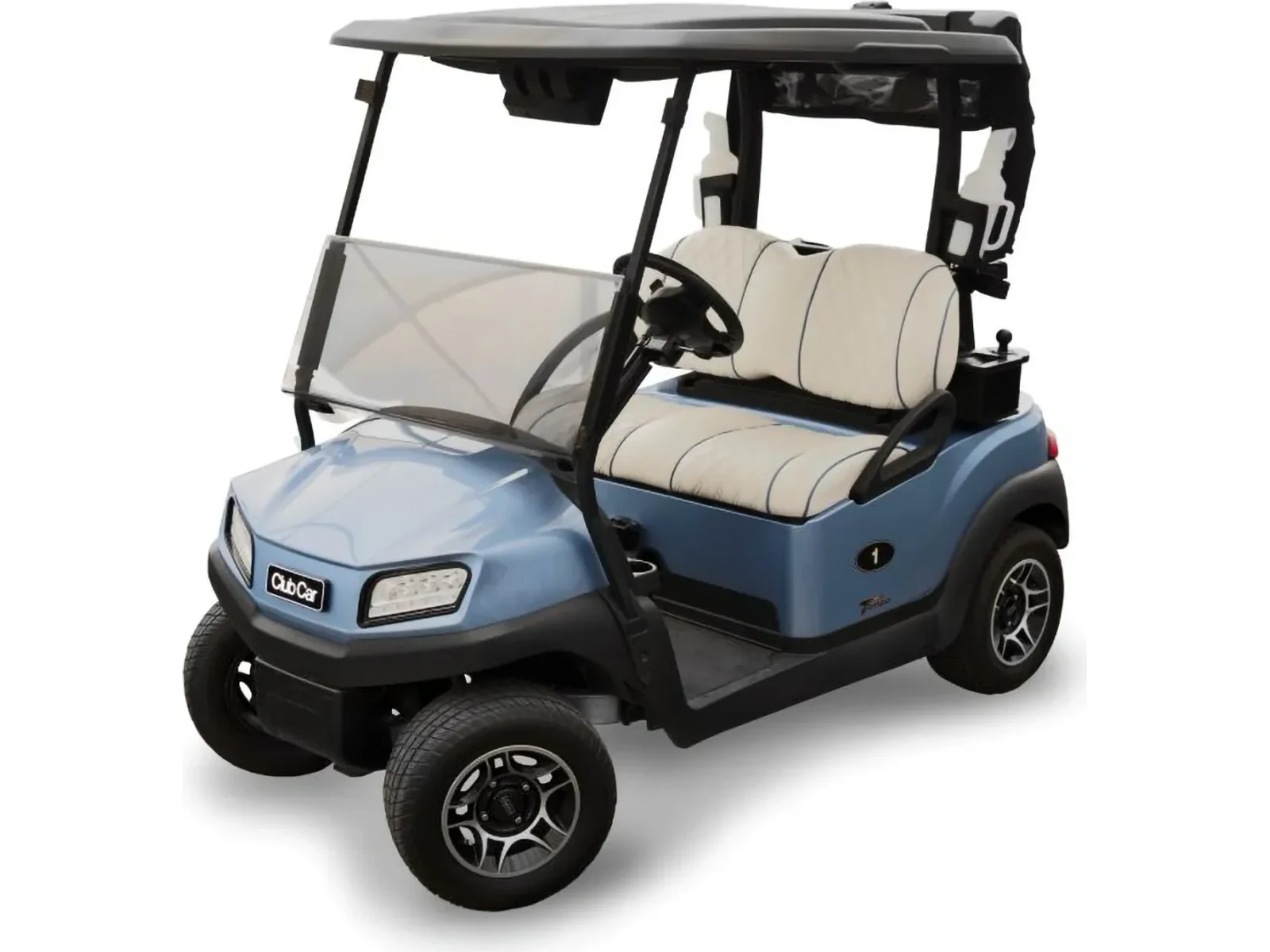
Club Car Tempo Lithium (2025 Model)
Monaco Drive System, Rust-Proof Aluminum Frame, Automotive-Style Dashboard. Available for immediate dispatch from our Yatala QLD depot with nationwide enclosed delivery.
More Australian Golf Buggy Guides
Electric Utility Buggy Pricing in Australia: Purchase Costs, Battery Life & Running Economics
Transparent 2025 pricing analysis for electric utility buggies in Australia. Comparison of acquisition costs, 240V charging electricity, and maintenance savings.
Buying a 4-Seater Golf Buggy in Australia: Road Rules, Acreage & Resort Access
Everything you need to know before buying a 4-passenger golf buggy in QLD, NSW, and VIC — conditional registration, community estate bylaws, and safety specs.
How to Choose the Right Electric Golf Buggy in Australia: Walk-Behind vs Ride-On Comparison
A definitive guide comparing walk-behind electric caddies, traditional 2-seaters, 4-passenger estate cruisers, and off-road 4x4 carts for Australian lifestyle and terrain.