
Best Push Golf Buggy in Australia: 3-Wheel vs 4-Wheel Stability & Performance Review
Best golf push buggy australia: Comparing 3-wheel swivel agility against 4-wheel slope stability. Discover the best push golf buggies for Australian golfers seeking durability and boot portability.
The Case for the Manual Push Buggy in 2025
Despite the rapid adoption of motorized carts, the manual push golf buggy remains the most popular walking companion across Australian golf clubs. A high-grade push cart requires zero battery recharging, features virtually indestructible mechanical engineering, folds into the boot in seconds, and provides clean, wholesome aerobic exercise without the shoulder and spinal strain associated with carrying a bag.
3-Wheel Push Buggies: Maneuverability, Swivel Wheels & Tight Fairway Turns
The 3-wheel architecture is the dominant choice for golfers who value nimble handling. Featuring a single front wheel that either swivels 360 degrees or locks in a forward track, a three-wheel cart pivots effortlessly with slight downward pressure on the handle. On flat to moderately undulating courses, this triangular layout glides smoothly through tight walkways, bunker fringes, and practice putting greens.
- •Effortless 360-degree turning with one hand on flat fairway turf.
- •Significantly smaller folded footprint, ideal for small car boots like hatchbacks and compact SUVs.
- •Front wheel alignment dials allow quick tracking adjustments if the cart pulls to one side.
4-Wheel Push Buggies: Wide Wheelbase & Anti-Roll Stability on Steep Slopes
For golfers who regularly play mountain courses or steep coastal links (such as The Dunes in Victoria or Bonville in NSW), a 4-wheel push cart offers superior stability. With four widely spaced contact points, the center of gravity sits lower to the ground. When traversing steep side-slopes, a 4-wheel cart is virtually impossible to roll over, even when loaded with an oversized tour bag packed with wet-weather gear and umbrella accessories.
Braking Systems & Airless Foam Tyres: What to Look For
Never purchase a push buggy without a dependable braking mechanism. Look for handle-mounted cable handbrakes that allow instant engagement without bending down, or robust foot-operated push-push locks that secure the rear wheels on steep tee boxes. Furthermore, modern Australian buggies feature airless EVA foam or polyurethane tyres that glide smoothly without the risk of prickles or sharp gravel punctures.
Ergonomics, Console Storage, and Beverage Holders
Premium push buggies feature deluxe console trays with magnetic ball markers, scorecard clips, pencil sleeves, and deep mesh accessory bags for rangefinders. Ensure the buggy includes an integrated umbrella mount receiver designed for deep Australian sun and rain brollies, protecting you through intense summer rounds.
Wheel Bearings and Why Cheap Buggies Feel Heavy
The difference between a push buggy that rolls sweetly and one that feels like hard work is usually bearings rather than weight. Quality sealed bearings spin freely and, more importantly, stay sealed against the sand, grass clippings and irrigation water that a golf course throws at them constantly. Cheap bushings feel acceptable in the shop and deteriorate within a season, at which point the buggy drags and every hole becomes more effort than it should be. Sealed bearings also survive being hosed down, which is the only realistic way to clean a buggy after a wet round. If you are comparing two models at similar prices, spinning each wheel by hand and seeing how long it keeps turning tells you more than the specification sheet does.
Airless Tyres Versus Pneumatic on Australian Courses
Airless foam tyres have become common and they solve a real annoyance: they never go flat, never need pumping and never strand you mid-round. That convenience comes with a trade-off worth understanding. A pneumatic tyre deforms around bumps and absorbs some of the shock, which keeps the buggy tracking smoothly over roots, cart-path joins and firm winter ground. Foam is harder and transmits more of that through the frame to your hand. On the soft, well-watered turf typical of coastal Australian courses the difference is minor and the convenience usually wins. On firm inland or links-style ground played through a dry summer, pneumatic tyres ride noticeably better. Consider where you actually play most rather than the general recommendation.
Frequently Asked Questions
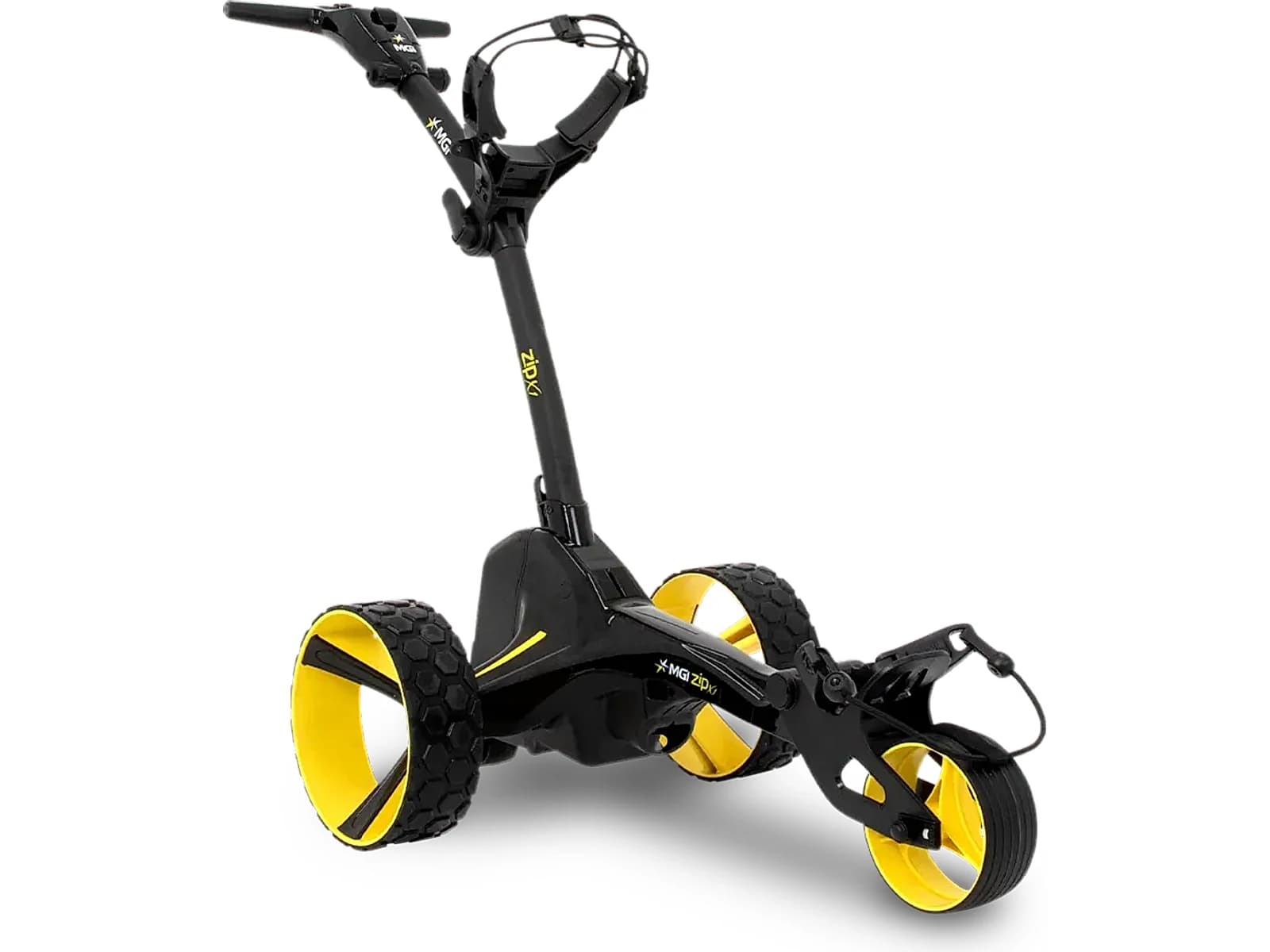
MGI Zip X1 Lithium Buggy
Simple Speed Dial, Click & Go Lithium System, Compact Fold Mechanism. Available for immediate dispatch from our Yatala QLD depot with nationwide enclosed delivery.
More Australian Golf Buggy Guides
Best Golf Trolley in Australia: Push vs Motorized vs Remote Control Comprehensive Evaluation
Find your ideal walking companion on Australian fairways. Detailed comparison of manual push trolleys, motorized walkers, and hands-free remote caddies.
Motorised vs Push Golf Buggies: Which Improves Stamina, Heart Rate & Your Handicap?
Sports science insights into how motorized golf buggies reduce shoulder fatigue, preserve back health, and save 2–3 shots per round on back-nine greens.
Foldable Golf Buggy Buying Guide: Boot Space Dimensions, Weight & Folding Mechanisms
A practical guide to folding golf buggies in Australia. Compact boot-space measurements, one-step fold mechanisms, quick-release wheels, and travel cases.